Sporty
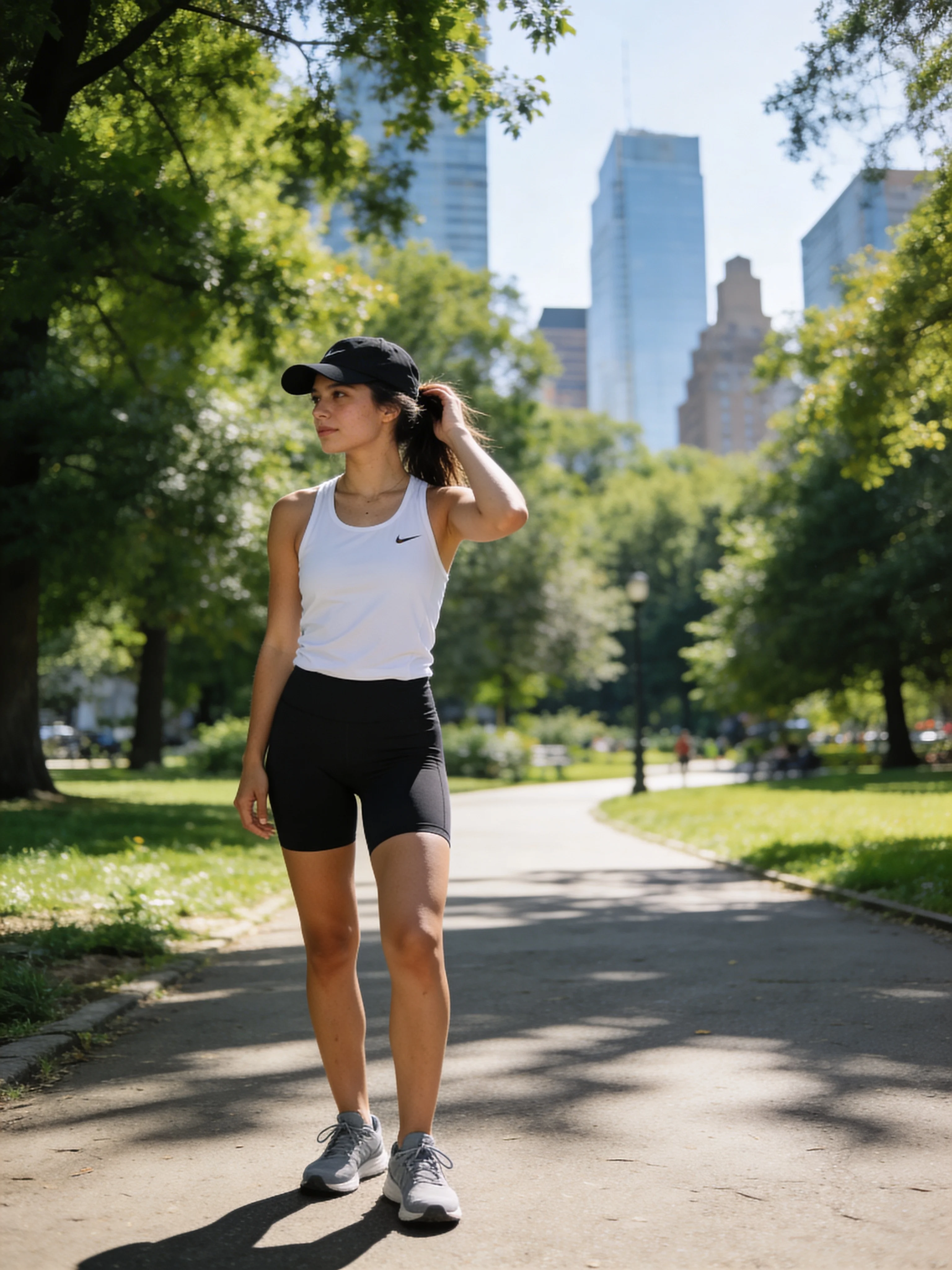
White Tank Race Day
A white sleeveless athletic tank keeps things breathable at 80°F with black biker shorts holding the athletic silhouette. The baseball cap handles the sun.

Thursday, March 19
Based on 77°F and partly cloudy

top / Short-Sleeve Top
classic tee

bottom / Jeans
straight-leg
chinos for a slightly smarter look

footwear / Sneakers
white sneakers
cushioned for all-day city walking
Fort Myers sits on Florida's southwest Gulf Coast, where the climate divides sharply into two seasons: a hot, humid wet season from May through October and a warm, dry season from November through April. Summers are intensely hot, with temperatures regularly climbing into the low 90s°F and afternoon thunderstorms arriving almost daily — sometimes lasting only 30 minutes, sometimes longer. Humidity makes the heat feel heavier than the thermometer suggests, so breathable fabrics are essential from June through September. Winters are genuinely mild and sunny, with daytime highs in the 70s°F and cooler evenings that occasionally dip into the 50s°F, particularly in December and January. Locals dress casually year-round, leaning toward resort-casual and beach-ready outfits. You'll see plenty of linen, chambray, and moisture-wicking fabrics at restaurants along McGregor Boulevard or while exploring the Edison and Ford Winter Estates. Even in the coolest months, a light jacket or cardigan is usually enough for evenings. Fort Myers is not a city where heavy coats or boots are standard — visitors who over-pack for cold weather are typically caught off guard by how warm winter afternoons feel here.
A white sleeveless athletic tank keeps things breathable at 80°F with black biker shorts holding the athletic silhouette. The baseball cap handles the sun.
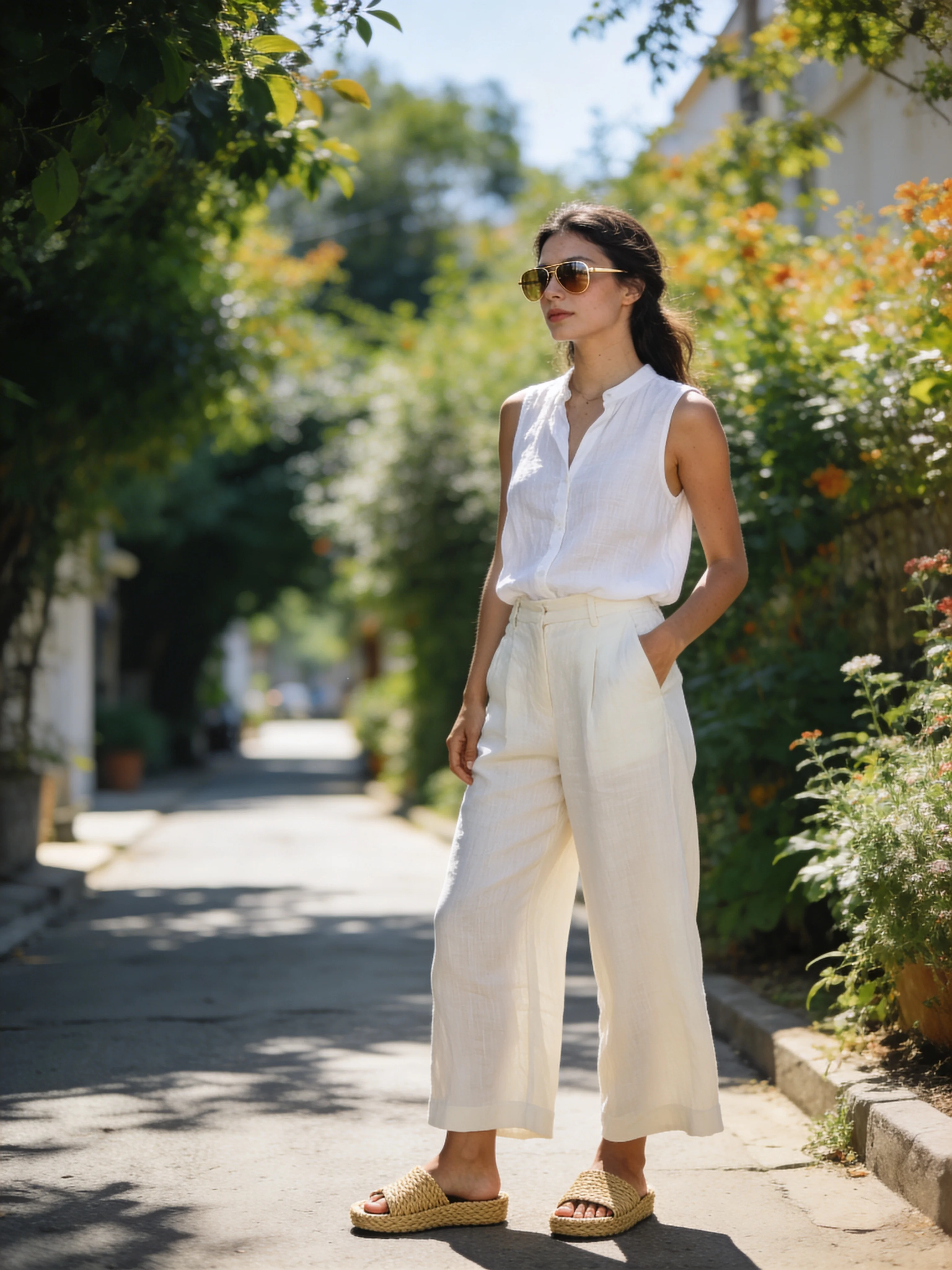
A white linen sleeveless blouse tucked into cream wide-leg linen trousers is the clean hot-weather business-casual answer. Espadrilles and gold aviators are all the styling it needs.
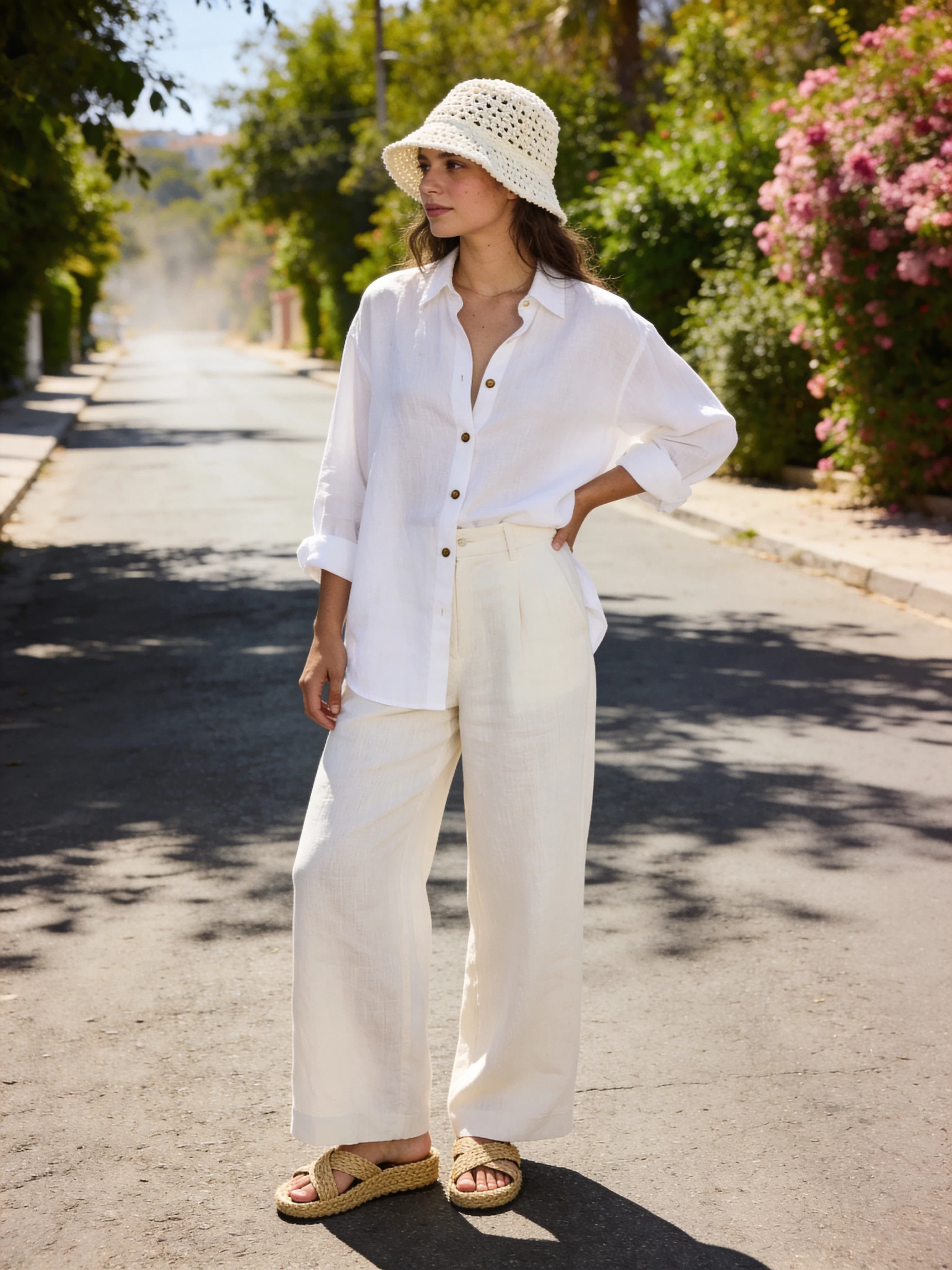
A white oversized button-down with ivory wide-leg linen trousers is the understated hot-day summer uniform. Espadrilles and a crochet bucket hat finish it without effort.
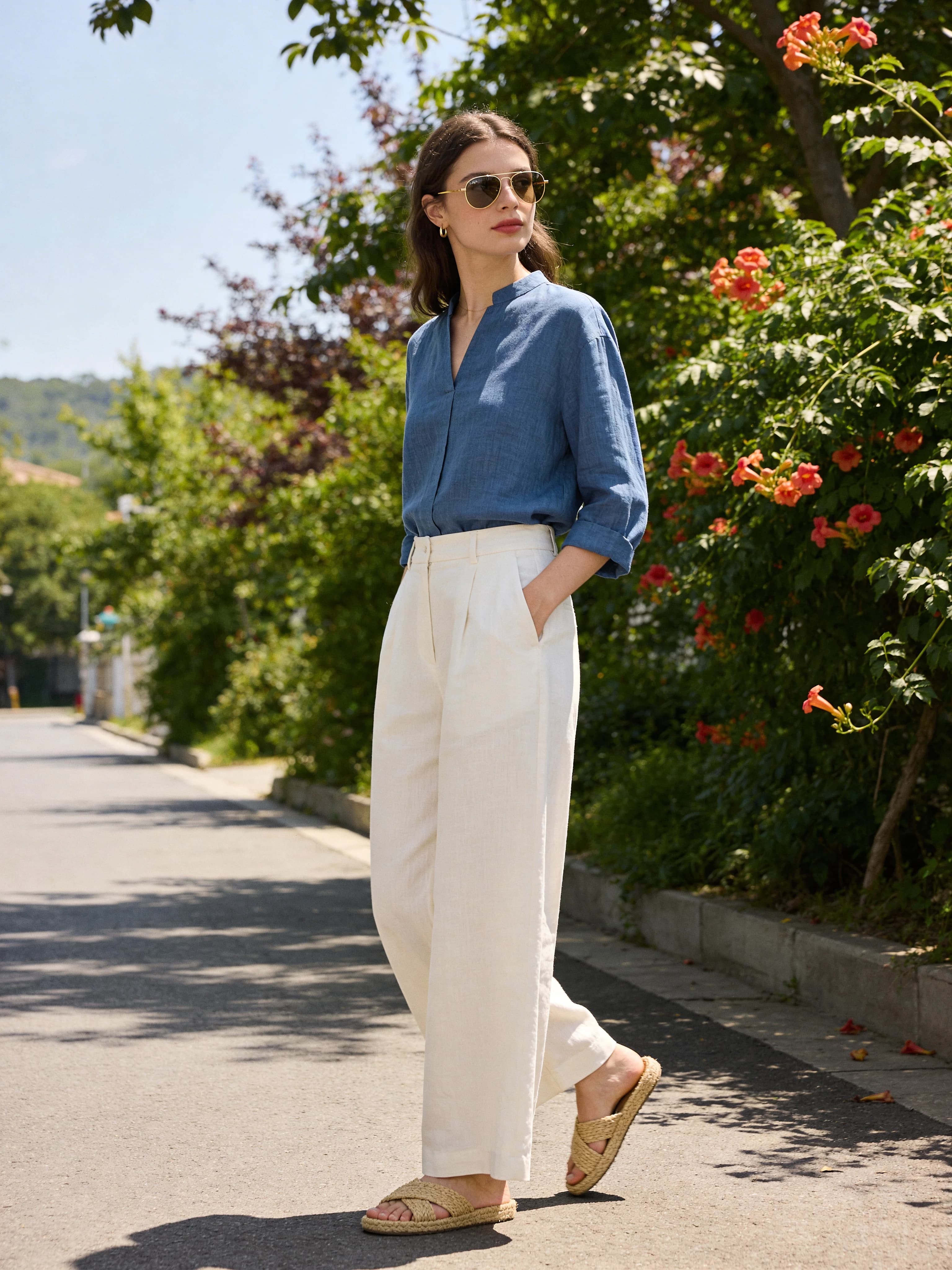
A blue linen collarless blouse over ivory wide-leg linen trousers in the heat is understated and intentional. Gold-frame aviators are the only thing needed to complete the picture.
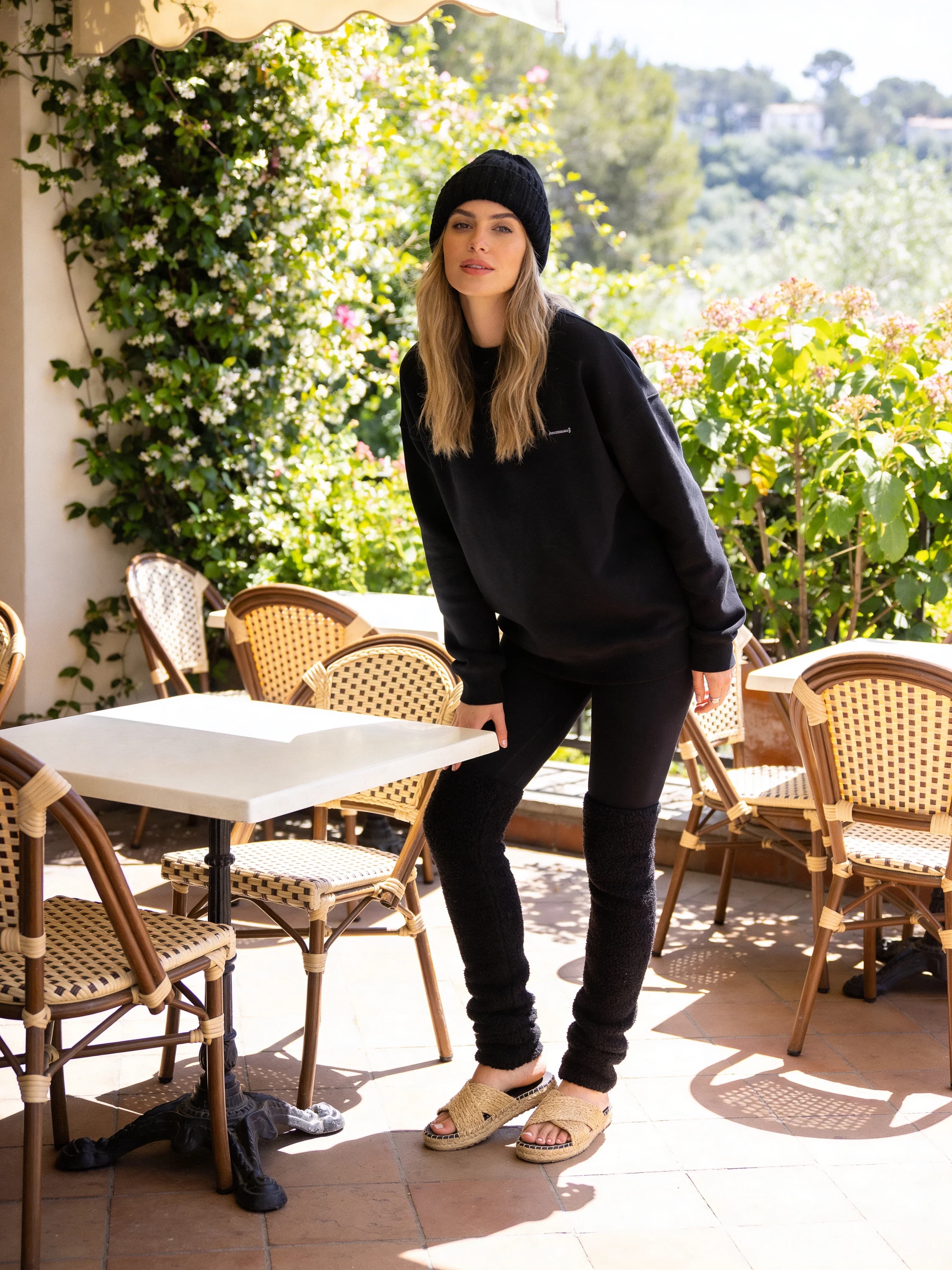
A black crewneck and fleece leggings with espadrilles in the heat is the statement of someone who runs cold. The knit beanie seals the commitment.
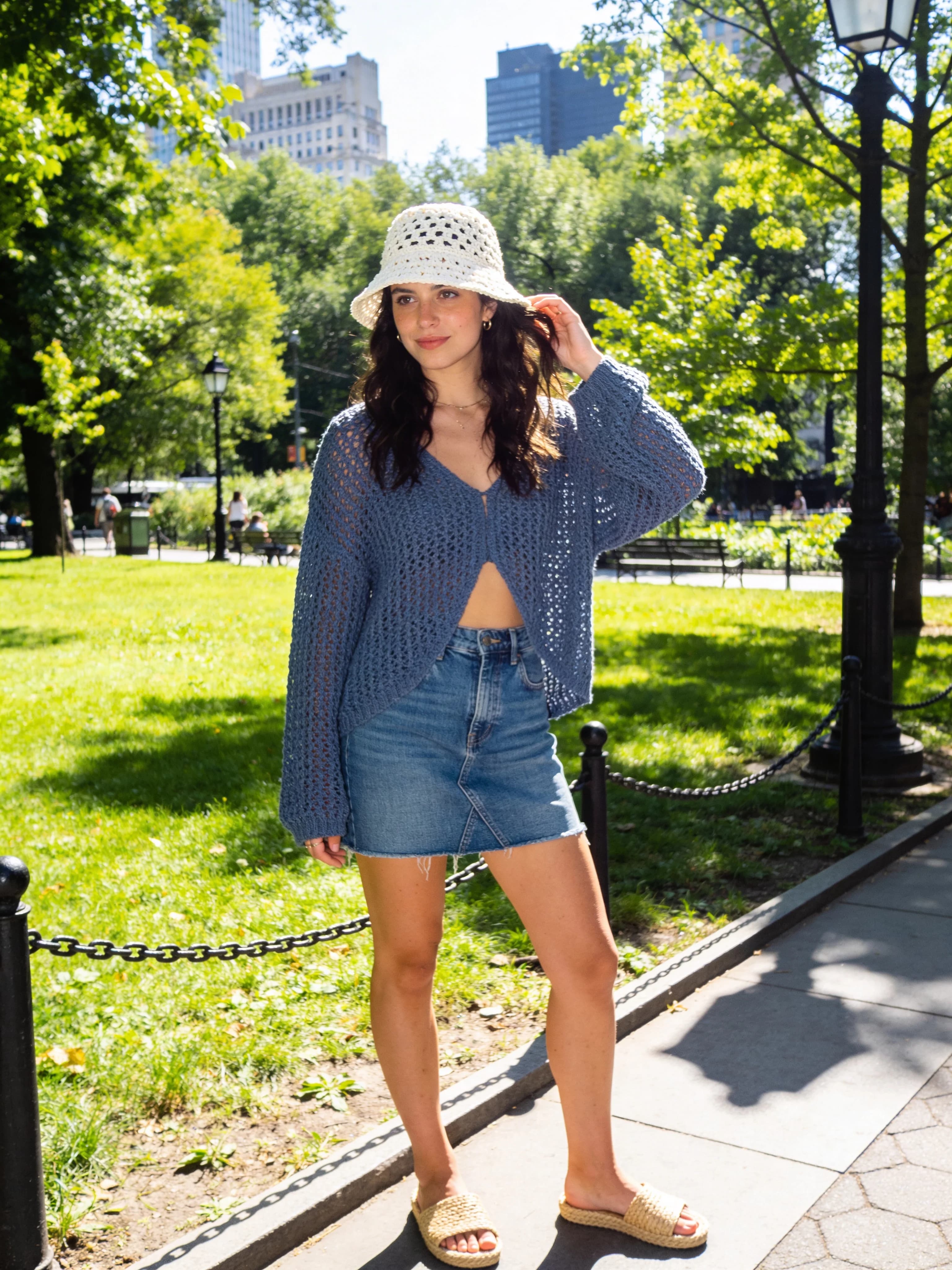
A dusty blue open-knit sweater worn loose over a denim mini skirt is the easy hot-day look. Espadrilles and a crochet hat keep it relaxed and summery.
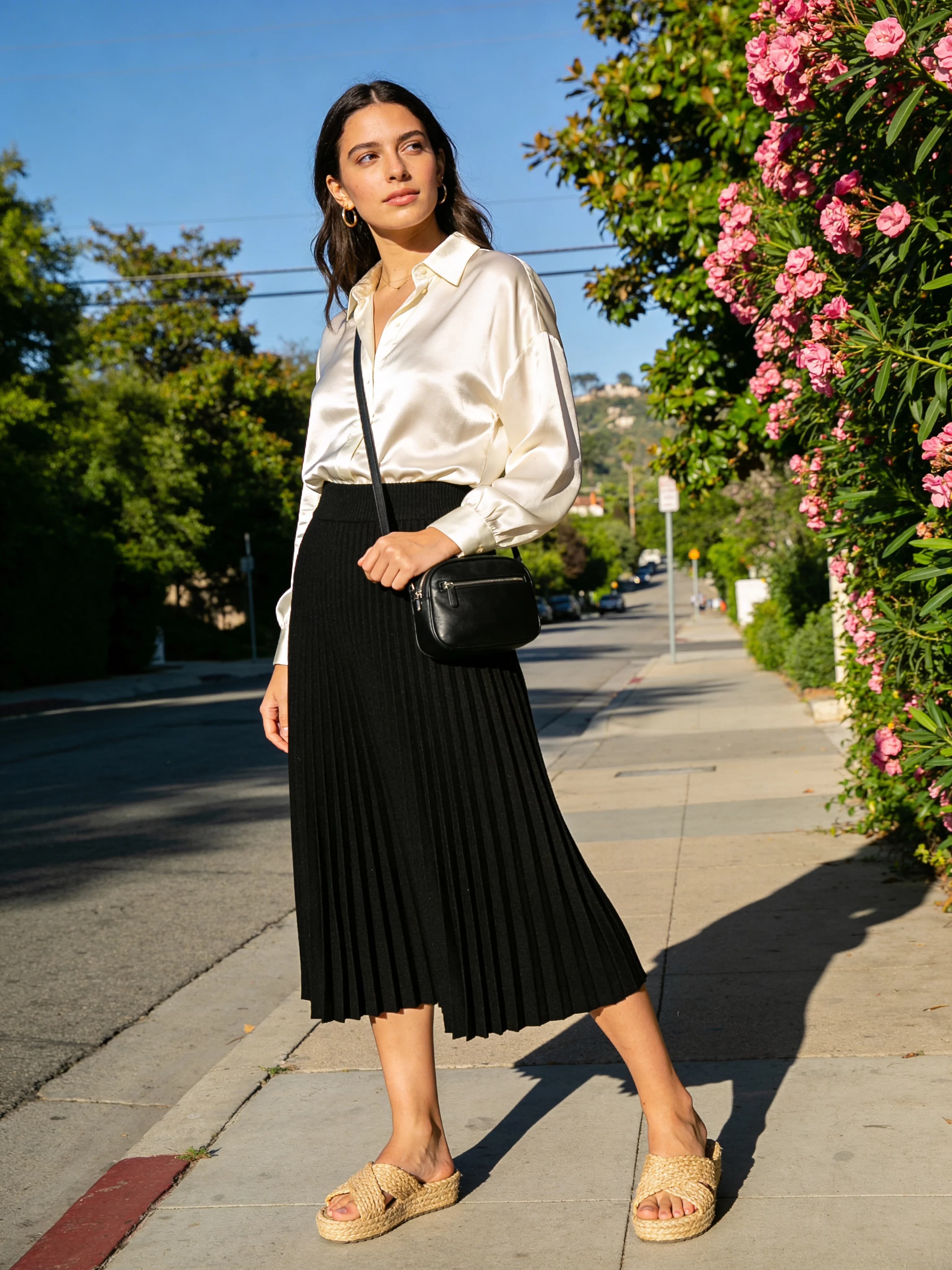
An ivory silk-look blouse and black pleated maxi skirt in the heat is the formal look that earns its occasion without adding weight. Espadrilles keep it grounded in the season.
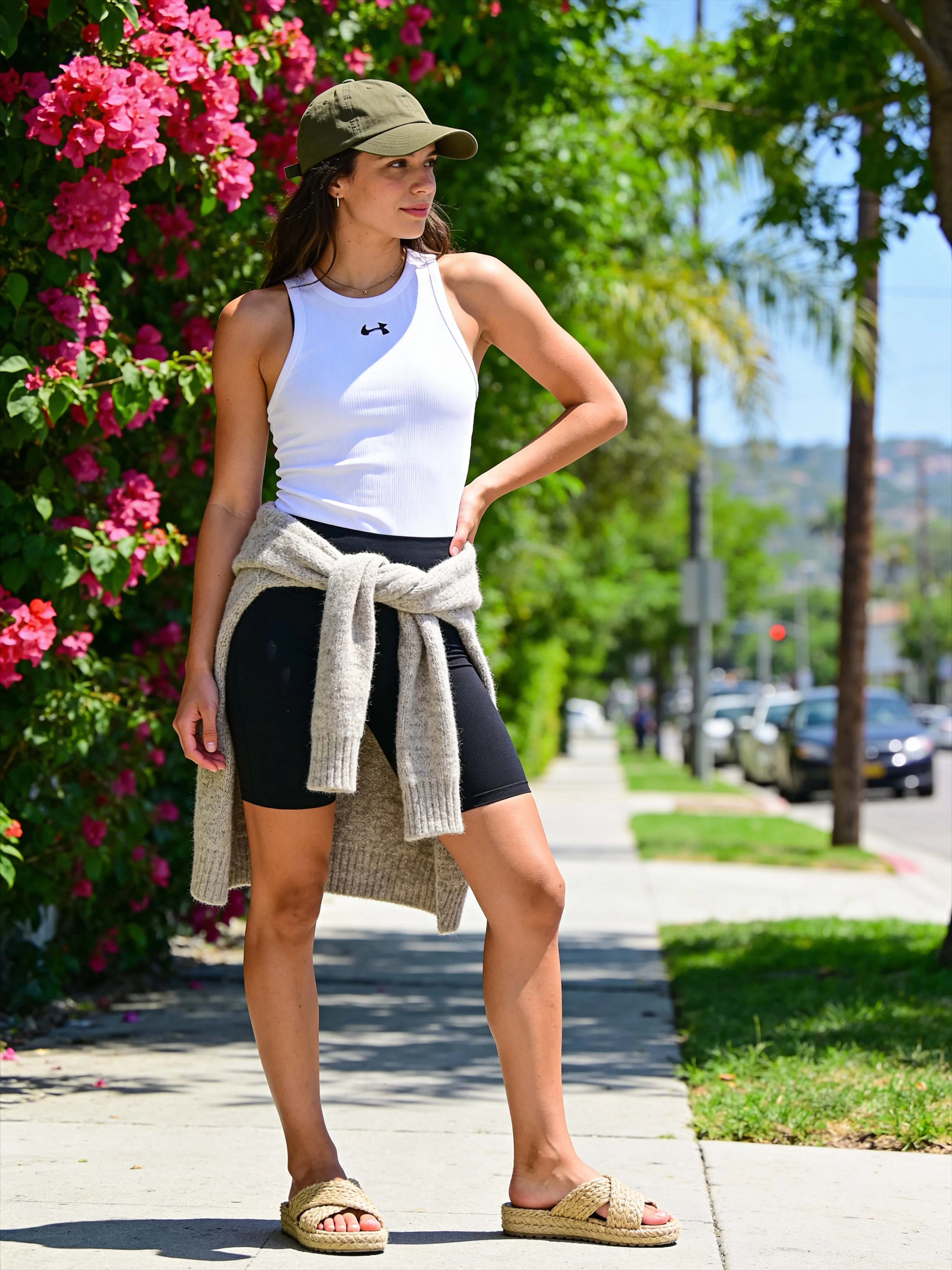
A white athletic tank with black biker shorts and espadrilles is the clean hot-day sporty look. An olive baseball cap is the functional accessory that pulls the palette.
See typical weather and outfit ideas for Fort Myers in any month of the year.
Winter in Fort Myers is warm and dry, with daytime highs typically in the mid-to-upper 70s°F from December through February. Light layers work best — think linen trousers, sundresses, or shorts during the day paired with a lightweight cardigan or denim jacket for cooler evenings. You won't need a heavy coat, but a packable layer is useful for air-conditioned restaurants and the occasional chilly morning.
Summers in Fort Myers are hot and humid, with temperatures in the 90s°F and near-daily afternoon thunderstorms from June through September. Stick to lightweight, moisture-wicking or natural fabrics like linen, cotton, and bamboo blends. A rain jacket or compact umbrella is worth carrying, and UV-protective clothing is practical given the intense Gulf Coast sun.
Fort Myers is rarely cold by most standards. Winter is the coolest season, but daytime temperatures typically stay in the 70s°F, and freezing temperatures are extremely rare. Evenings from December through February can cool down to the 50s°F, so a light jacket is useful, but heavy winter clothing is not necessary for a trip to Fort Myers.
Fort Myers has a subtropical climate with two distinct seasons: a hot, humid, and rainy summer season from May through October and a warm, dry winter season from November through April. Annual average temperatures range from the low 60s°F in winter nights to the low 90s°F in summer afternoons. The city receives most of its rainfall during the wet season, largely through intense afternoon thunderstorms that pass quickly.